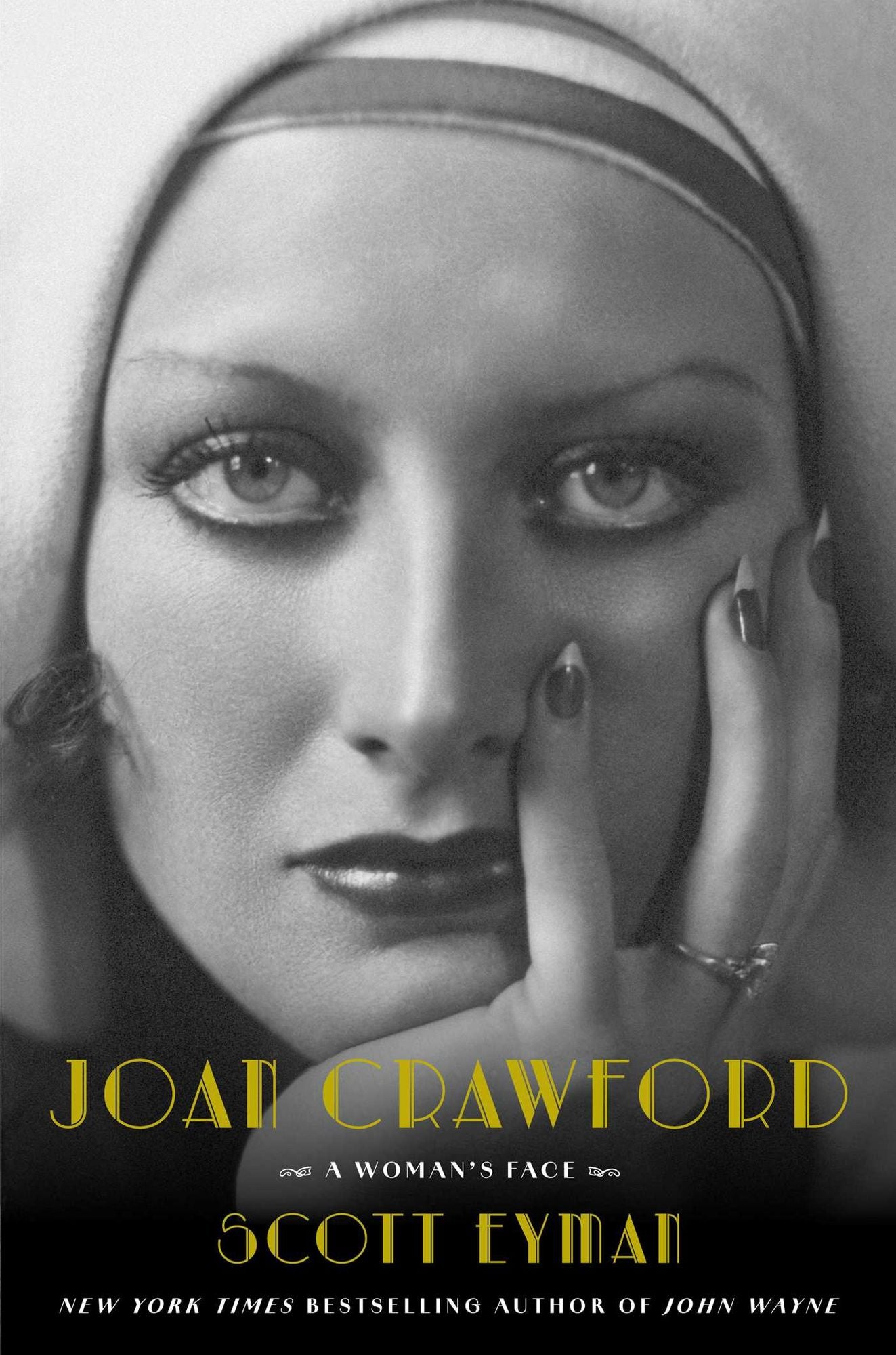
Lucille LeSueur shed the pain of her past when she relocated to Hollywood, became an actress, and was rechristened Joan Crawford. Her early years in Texas are marked by inconsistencies regarding her birth year and biological father. Her relationship with her mother and brother was estranged. In 1924, Crawford was hired by MGM and played minor roles until starring in 1928’s “Our Dancing Daughters.” Crawford was known for a commanding screen presence, and she remained a star at MGM until the early 1940s. Crawford’s innate ability to throw herself into a role would garner her the Academy Award for Best Actress in 1946 for “Mildred Pierce.” Her off-screen life would be notable for high-profile romances and posthumous allegations of abuse by one of her children, which damaged her legacy.
Scott Eyman has a clear talent for writing about fascinating and complex celebrities ("Cary Grant: A Brilliant Disguise"). His latest biography continues that trend as he explores the life and work of the brilliant Joan Crawford. Eyman masterfully highlights the highs and lows of Crawford’s career while providing a wealth of information about Crawford’s friendships and relationships that contrasts with the “Mommie Dearest” image that has persisted over the years.